Showing posts with label survey. Show all posts

Relying on donations to survive

Percentage selling productsMy recent survey on organisations addressing social issues in South Africa, shows that the vast majority of the sample surveyed, are reliant on donations to survive.

The survey was completed by 153 organisations, and the full results can be found on this blog.

All the organisations surveyed have been set-up to directly address social or environmental issues in South Africa.

Two-thirds of the organisations are reliant on donations and grants to survive, meaning they do not have an independent way of generating an income to help the organisation to survive.

Some organisations that completed the survey are, arguably, in the fortunate position where they are completely sponsored by a parent organisation or trust.

But what happens if the parent organisation gets into financial difficulties or their objectives change, meaning they can no longer support the subsidiary organisation that is striving to address social causes?

Without an independent income source, the organisation will continue to be reliant on hand-outs and have little control over their future existence.

The good news is that a fifth of the organisations that were interviewed do sell products or services that cover their costs.

It's important that more organisations that are set-up to address social and environmental issues start to use the principles of social business so that they can become financially independent and no longer be at the whim of philanthropists.


Mike.

Social business is not reliant on donations and grants to survive

Social business does not need donationsCharities are reliant on donations and grants to survive, meaning they need to spend a significant amount of time building relationships to obtain their funding.

Unfortunately there is no such thing as a free lunch.

Charities generally have little control over what funding they get and when they get it. Sure if they are running an effective organisation that is meeting its social objectives, they are more likely to attract developmental funders and philanthropists; but the donations are not guaranteed and when the economy is in a downturn or a commercial organisation is not meeting its financial objectives then CSR budgets and donations will be cut, impacting charities revenue streams.

The fourth key principle is that social business is not reliant on donations and grants to survive, paying back any investment made to the business.

Social businesses have full control of their own revenue stream by selling products and services that cover their costs.

There will be times when external investment is required for social business (e.g. a new business or project start-up), which is the same for any commercial business. It is important that these investments are taken as a loan, and not as a donation or in return for equity which will impact the ownership of the business.

The loan should be repaid at market rates, which will provide focus to operate as a commercial business. The loan interest will be covered by the products and services the social business sells.

Typically the turn-around time for gaining funds via a loan will be much quicker to obtain than a donation or grant, allowing the business to address social issues in a much quicker time-frame.

A challenge now is for organisations addressing social issues in South Africa is to remove their reliance on donations and grants to survive (as identified in my recent survey) and start operating as social businesses.


Mike.

Social business survey results

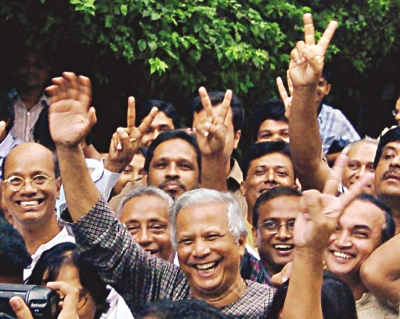
Muhammad YunusMy dissertation on Using business to address social issues in South Africa, included research I conducted to establish the following:

1. Are organisations addressing social issues in South Africa relying on charity to survive?

2. What are the organisation’s sources of income?

3. What happens to the organisation’s profits?

4. Are they setting social and economic targets and measuring their performance?


There were over 150 responses to the survey and I would like to thank all for taking part, which has helped me a great deal in my research.


Arrow

Click here to get the results to the survey


Mike.
 
Afrigator